064DSC_7116
060DSC_7089
066DSC_7134
069DSC_7147
071DSC_7163
049DSC_7007
072DSC_7174
055DSC_7062
070DSC_7153
053DSC_7033
059DSC_7087
058DSC_7073
000035 (1).JPG
000039 (1).JPG
000038 (1).JPG


house_o 


A renovation of a reinforced concrete apartment approximately 40 years old. Under constraints that prevent major changes to the locations of plumbing and circulation, the project accepts the existing framework while reconfiguring the flexibility of living by making the use of space itself variable.

Taking the centrally located entrance and existing circulation as a starting point, the living and dining areas are secured as a continuous open space, while the bedroom and workspace are gently separated by curtains. Rather than relying on fixed walls, the relationships between spaces shift according to daily life, enabling both spatial openness and diverse uses within a limited floor area.

Movable furniture made of galvanized steel is dispersed throughout the interior, designed to traverse multiple roles such as storage, partition, and fixture. Instead of prescribing fixed functions, these elements are positioned as devices that can be continually reinterpreted through everyday use.

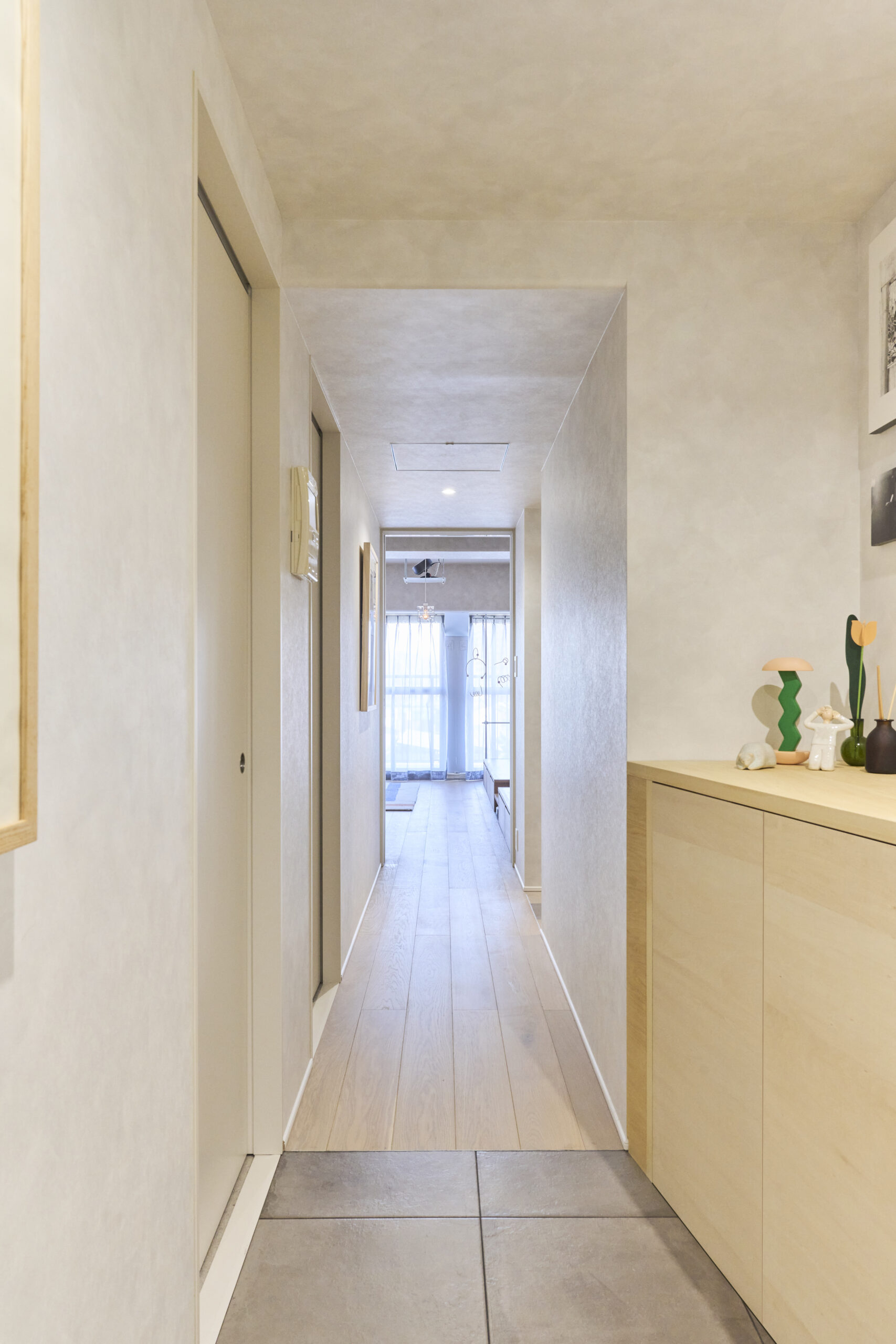
The entrance and corridor are expanded beyond mere circulation into surplus space that can accommodate work and display, introducing a sense of exteriority and publicness into the domestic environment.

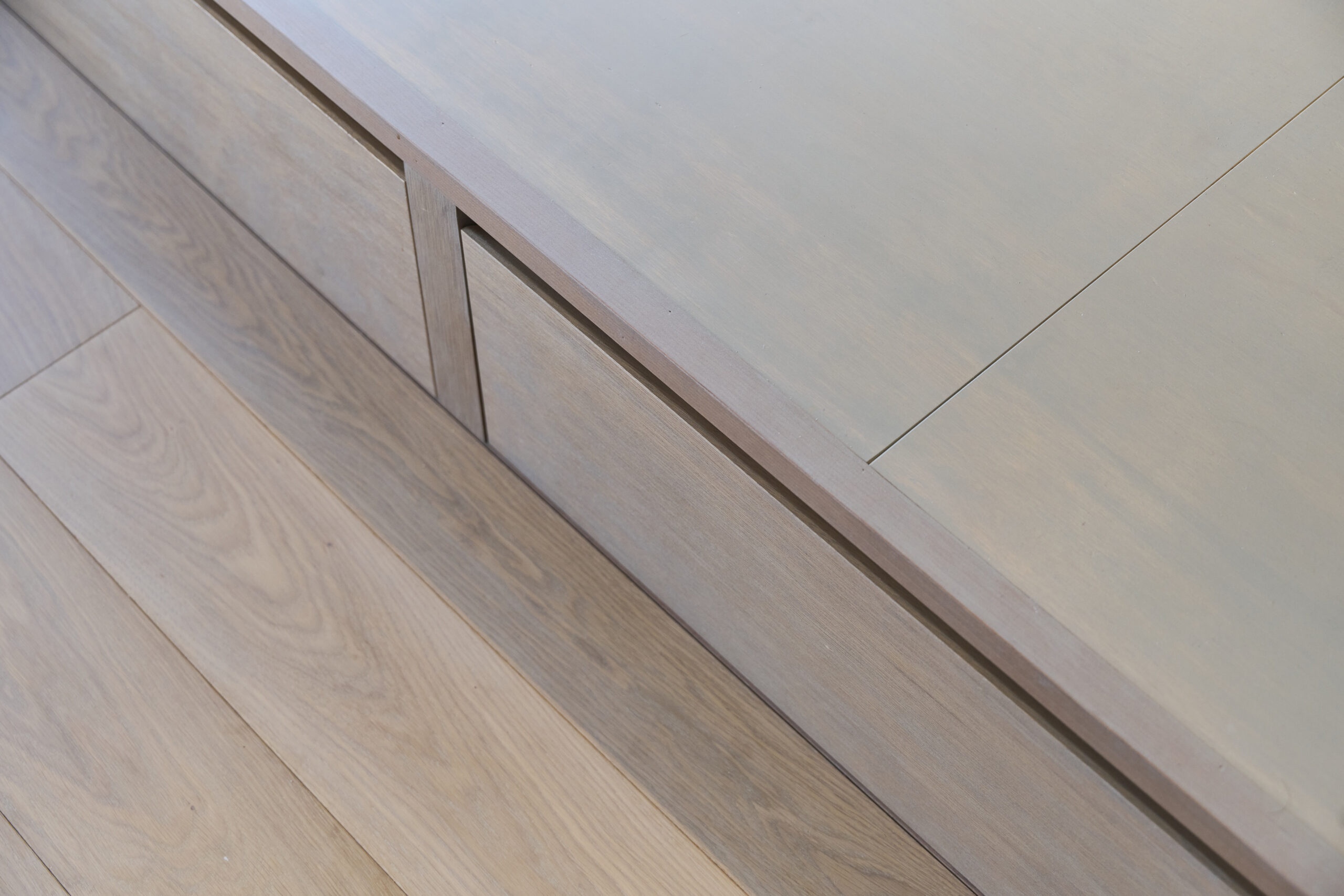
Storage is embedded into architectural elements such as the floor and columns, minimizing its presence while securing capacity. In contrast, elements like column storage deliberately assert volume, creating spatial articulation. This contrast between function and form adds strength to what might otherwise become a monotonous one-room configuration.

Light is softly diffused through FRP sliding doors and openings, allowing the atmosphere of the space to shift over time. Ceiling lighting is kept as unobtrusive as possible, maintaining the integrity of the ceiling plane while creating a calm luminous environment.

Finishes unify the space through a consistent material palette, while subtle variations in color gently articulate different zones. Existing rounded (R) details are preserved and echoed in the furniture, establishing continuity and a cohesive spatial language.

Rather than manipulating a fixed layout, the project aims to create a living environment in which relationships are continuously updated through movable elements and a consistent material logic.


USE  mansion renovation
SITE   Kita-ku,Tokyo-to,Japan
COMPLETION   2024
DESIGNER    Takuya Yamamoto
CONSTRUCTION   Backs Inc. / studio HOHO
PHOTOGRAPH  Kenichi Inagaki / Tomoko Rikimaru


築約40年のRCマンションにおけるリノベーション。構造的制約により水回りや通路の位置を大きく変更できない条件の中で、既存の骨格を受け入れながら、空間の使われ方そのものを可変化することで、住まいの自由度を再編することを試みた。

中央に配置された玄関と既存の動線を基点に、リビング・ダイニングは一体の広がりとして確保し、寝室や作業室はカーテンによって緩やかに仕切る構成とした。固定された壁ではなく、生活に応じて関係性が変化することで、限られた面積の中でも空間の広がりと多様な使い方を両立させている。

内部には、亜鉛めっきによる可動式家具を点在させ、収納・間仕切り・什器といった複数の役割を横断する存在として計画した。用途をあらかじめ固定するのではなく、生活の中で更新され続ける装置として位置づけている。

玄関および通路空間は単なる動線としてではなく、作業や展示が可能な余白として拡張し、住まいの中に外部性や公共性の気配を持ち込んでいる。

収納は、床や柱といった建築的要素に埋め込むことで、存在を消しながらも容量を確保する一方、柱収納のようにあえてボリュームを立ち上げることで空間にメリハリを与えている。機能と形態のコントラストが、単調になりがちなワンルーム的構成に強度を与えている。

光の扱いにおいては、FRP素材の引き戸や窓を介して柔らかく拡散させ、時間帯によって空間の表情が変化するよう計画した。天井照明も極力存在感を抑え、面としての天井のまとまりを保ちながら、静かな光環境をつくり出している。

仕上げは、全体を同質な素材感で包みながら色味の差異によって緩やかに領域を分節している。また、既存のRディテールを継承し、家具にも同様の曲線を散りばめることで、空間全体に連続性と統一感を与えている。

固定された間取りを操作するのではなく、可動要素と素材の一貫性によって、生活とともに関係性が更新され続ける住空間を目指した計画である。


用途  住居
場所  東京都北区
完了  2024 年
設計  山本卓弥
施工  株式会社バックス / studio HOHO
撮影  稲垣 謙一 (kenichiinagaki.com) / 力丸 朋子